
Salem Flood Cleanup
When winter torrential rain and rising water tables threaten your home, immediate mitigation protects your foundation and framing. Stormwater runoff overwhelms basement floor drains during winter storms, requiring urgent water extraction and structural drying to stop mold development. Our emergency technicians respond around the clock with industrial pump-out units and high-capacity drying systems.
Call (503) 555-0180 once the storm has passed.
Prefer to talk? (503) 555-0180
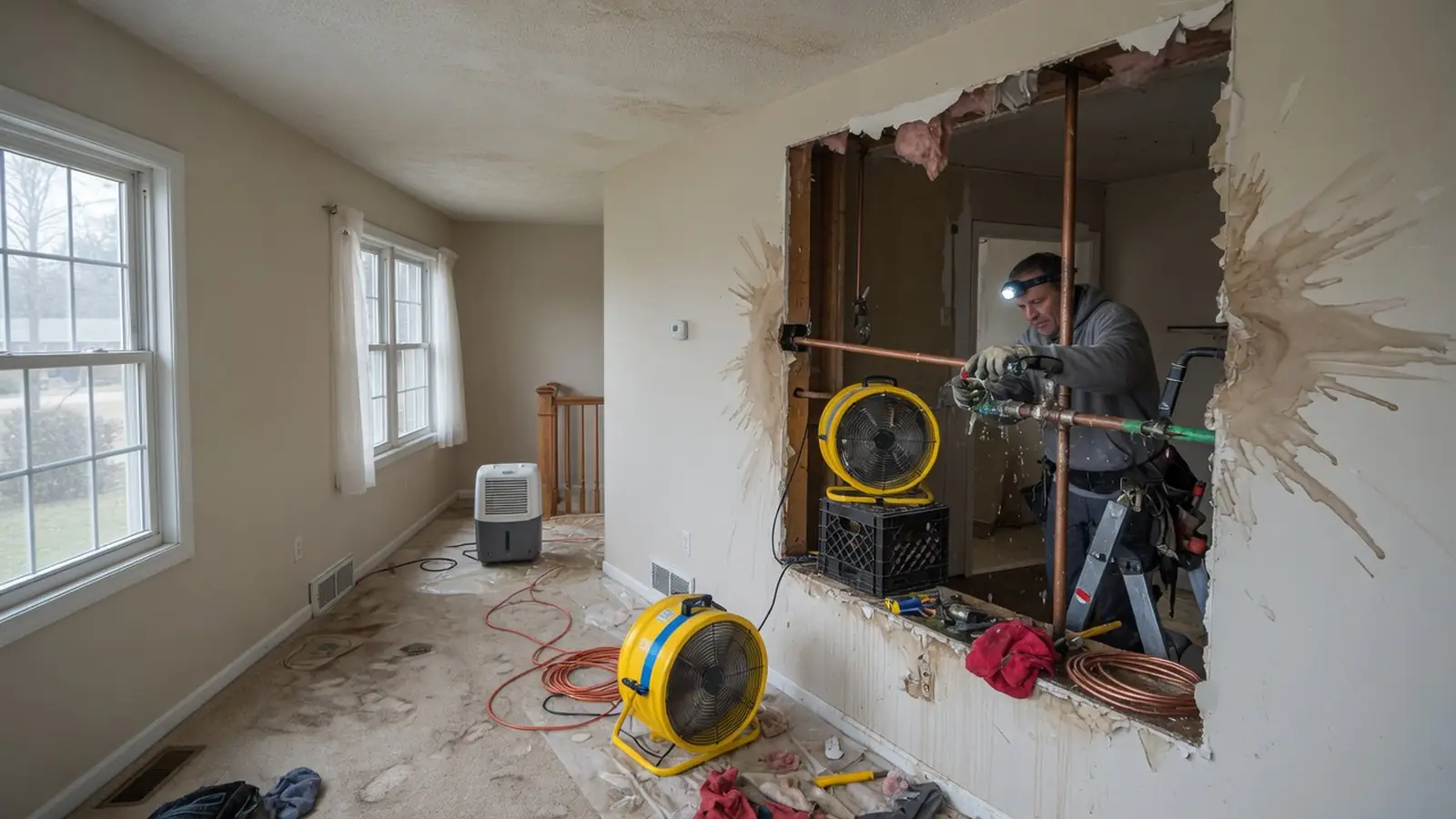
Experienced Flood Restoration Technicians
Our restoration team serves the surrounding Willamette River basin, where 69,286 housing units are on record in the Census ACS 5-year estimates.
About 62% of housing units in the local area (42,655 of 69,286) were built before 1980, the period when asbestos-containing materials and lead paint were still in use.
The median owner-occupied home locally was built in 1979 (Census ACS 5-year), presenting older building envelopes that require careful environmental testing during intrusive teardown.
We specialize in dispatching emergency water damage restoration crews to pump flooded basements and dry out waterlogged structures.
Our certified technicians deploy thermal imaging cameras and commercial moisture meters to track hidden migration paths behind wet wall cavities.
Every project concludes with containment scrubbing, antimicrobial wipe-downs, and verified moisture readings before structural rebuilds begin.
How We Mitigate Flood Damage
Our structured mitigation process stops active intrusion, removes contaminated water, and prevents secondary microbial growth.
- Immediate Extraction And Containment. Our technicians arrive with truck-mounted vacuum units to eliminate standing floodwater immediately, placing containment barriers to isolate contaminated zones.
- Subsurface And Crawl Space Mitigation. As trade inspections frequently reveal, unchecked crawl space water intrusion rots wooden floor joists and degrades foundations even when water issues remain hidden away from living areas. We focus on inspecting and pumping out standing crawl space water before rot compromises the floor framing.
- Blackwater Tear-Out And Antimicrobial Wash. Overland floodwaters entering living areas are classified as Category 3 blackwater, requiring full removal of saturated drywall, baseboards, and carpet padding before structural drying. We strip porous materials up to safe flood cuts and treat exposed structural studs with hospital-grade EPA registered antimicrobials.
- Industrial Dehumidification And Verification. High winter relative humidity in the regional basin requires industrial desiccant or LGR dehumidifiers to create targeted vapor pressure deficits, as outdoor ventilation simply introduces more damp air. We run continuous psychrometric monitoring to ensure all structural timber reaches dry standard equilibrium.
Certified Workmanship And Defensible Documentation
Flood remediation demands uncompromising sanitation standards and accurate moisture logging for insurance claims. Our crews follow strict IICRC S500 guidelines, providing detailed daily psychrometric logs, moisture mapping, and post-drying verification. When microbial contamination is identified, we integrate certified mold remediation and structural decontamination protocols to protect indoor air quality without inflated change orders.
Basement Flood Water Extraction
Stormwater runoff overwhelms basement floor drains during winter storms, requiring urgent water extraction and structural drying to stop mold development. Our team brings high-volume submersible pumps and weighted extraction heads to pull standing water from concrete slabs and subterranean rooms.
Sump Pump Overflow And Crawl Space Drying
Seasonal high water tables cause sump pumps to run continuously every half-minute, stoking fears of motor burnout and crawl space overflow. We install emergency backup pumping systems, extract standing crawl space pools, and deploy commercial blowers to dry mud-covered ground and subflooring.
Sewage And Silt Blackwater Cleanup
Overland surface runoff sweeps bacteria, street silt, and chemical contaminants directly into ground-level living spaces. We establish physical containment zones, remove hazardous sludge, apply botanical biocides, and operate HEPA air scrubbers to neutralize airborne contaminants.
Dedicated Flood Mitigation Across Marion County
We approach every flood call with methodical precision, adhering to strict structural drying standards and thorough moisture documentation. Our experienced technicians focus on rapid extraction, containment of hazardous blackwater, and verified psychrometric dry-down to restore structural integrity safely.
- 13Zip Codes Served
- 5Service Areas
- 3Services Offered
Read verified feedback from local homeowners who called on our restoration crews during unexpected groundwater emergencies and severe overland flooding.
“During the basement pump-out, the crew discovered that saturated insulation had collapsed behind an interior partition wall. They took care of the hidden contamination right away without slowing down the drying timeline. Their calm and methodical approach kept a bad situation from turning into a complete catastrophe.”
Marcus B.
“We had our final buyer home inspection scheduled in four days when groundwater flooded our finished lower level. The team arrived with heavy-duty dehumidifiers within ninety minutes and dried the structural sill plates ahead of the deadline. The sale closed on schedule thanks to their round-the-clock monitoring.”
Elena R.
“Another outfit extracted standing water from our crawl space but left soaked vapor barrier and soggy floor insulation behind to rot. This company came in, stripped out all the ruined materials, sanitized the subfloor joists, and got the relative humidity down to normal. I only wish I had called them first.”
Darren K.
“From the initial blackwater assessment to the final drying certificate, their upfront quote was honored to the penny. The crew clearly explained which baseboards and drywall sections had to be removed before touching anything, so there were zero surprise charges. Finding honest contractors who stick to their word is rare these days.”
Gwen T.
Frequently Asked Questions
How quickly does flood cleanup need to begin to prevent mold growth?
Flood cleanup must begin within twenty-four to forty-eight hours because harmful fungal spores germinate rapidly on moist drywall and timber. Rapid water extraction combined with commercial air movers stops microbial colonies before structural framing requires extensive containment and aggressive sanitization.
Is overland floodwater safe to clean up without professional equipment?
Overland floodwater contains toxic silt, bacteria, and chemical pathogens that require professional blackwater extraction gear to sanitize safely. Standard household shop vacuums lack the filtration and disinfection capacity needed to handle Category 3 biohazards without risking severe contamination.
How long does the structural drying phase typically take?
Complete structural drying typically takes three to five days depending on material density, air flow volume, and ambient relative humidity levels. Technicians track moisture content daily with penetrating probes to verify that wood subfloors and wall framing meet dry standards before clearance.
How can I tell white mineral deposits apart from toxic mold?
Homeowners struggle to distinguish whether white crystalline deposits on foundation stem walls are harmless mineral efflorescence or toxic mold. Efflorescence crumbles into a dry salt powder when touched and dissolves in water, whereas active mold feels fuzzy and emits a distinct musty odor.
Are older properties subject to special testing during flood tear-out?
Properties built prior to nineteen eighty require certified environmental testing for asbestos and lead paint before intrusive wall tear-outs. Because older drywall mud and vinyl flooring commonly harbor legacy hazardous fibers, professional crews sample building materials before cutting.